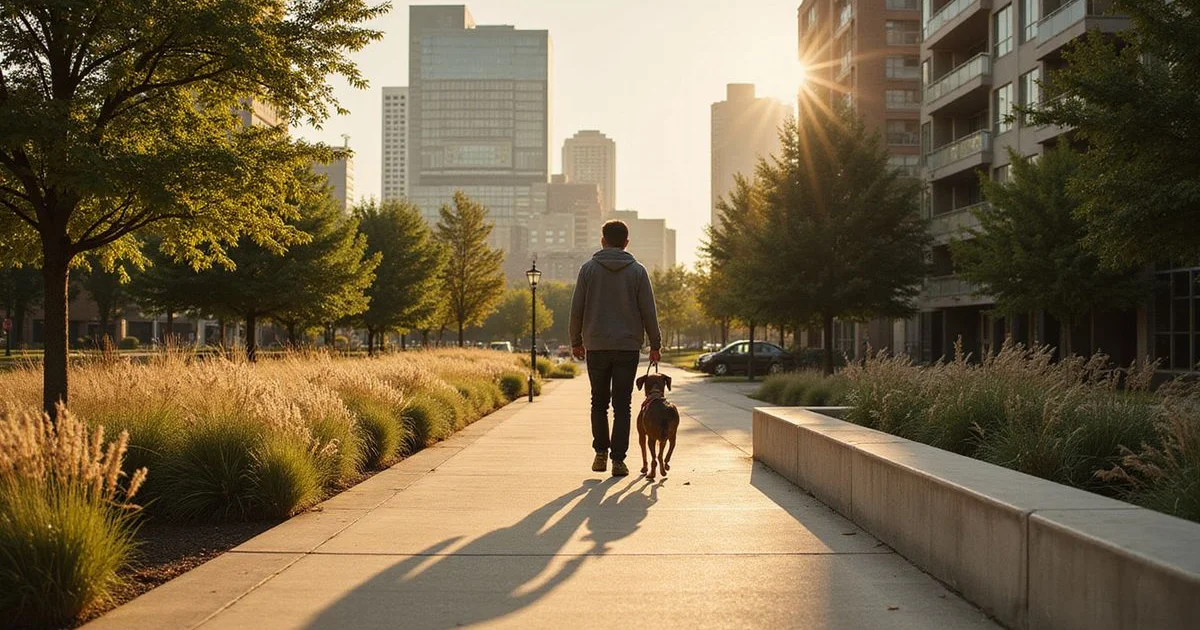
Our team often hears from property owners that living in a high rise with a dog completely changes a morning routine. You know how convenient garden-style living is with the grass just ten steps away. Making the leap to a tower requires the right building and floor strategy.
We have found that thousands of Dallas residents make this transition smoothly every year.
Knowing the logistics of this change is just as crucial as checking weight limits.
Our pet-friendly high rise apartments search covers policies; this guide covers daily life. Let’s look at the data, what it is actually telling us, and then explore practical routines to help manage your high-rise dog.
Elevators and Floor Choice
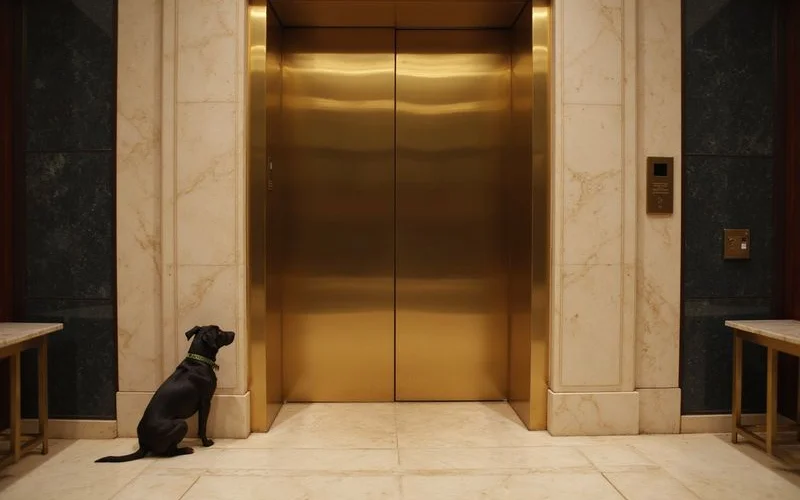
Every walk starts with an elevator ride, which means you must plan for delays during morning and evening rush hours. We advise clients to select lower or mid-level floors to shorten these mandatory trips.
A 2026 check of high-rise traffic patterns shows morning wait times often stretch up to two minutes during peak 7:30 a.m. departures. A few strategic choices make these rides much easier:
- Lower or mid floors shorten trips, especially at towers with fewer elevators per unit.
- Units near the elevator bank cut the hallway walk.
- Buildings with more elevators per floor plate move faster at peak times.
- Pet-friendly elevator etiquette: some buildings designate a service elevator for pets.
We always recommend floors in the lower third of the tower for puppies and senior dogs. This location significantly reduces transit time when your pet urgently needs a bathroom break.
Advisor note
Time the trip on your tour: unit door to grass, at 7:30 a.m. if you can. That’s the walk you’ll repeat twice a day for a year.
On-Site Pet Amenities
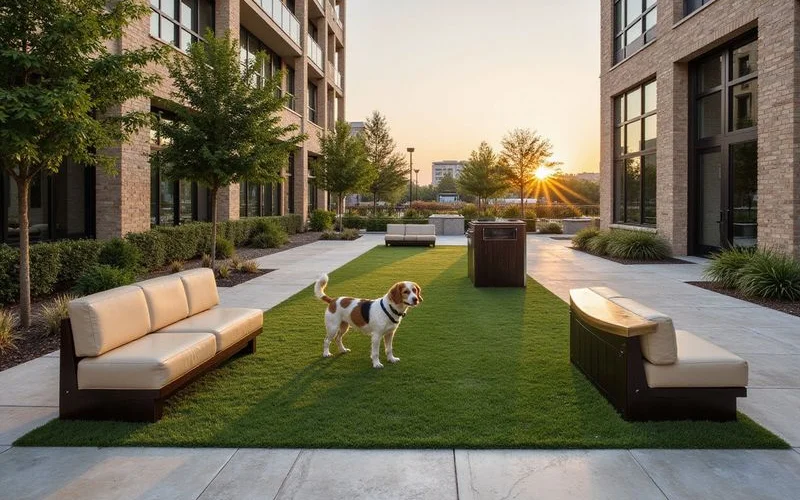
On-site relief areas make the biggest difference late at night and during bad weather. We see the best Dallas residential properties investing heavily in specialized pet facilities right on the property.
Many newer Dallas towers include:
- Dog runs or pet turf areas, sometimes featuring specialized K9Grass on an amenity deck.
- Pet spas and professional-grade dog wash stations, such as Evolution Dog Wash systems.
- Pet waste stations placed strategically along walking routes.
- Occasionally an off-leash dog park nearby or on site.
We know these features save you from standing outside during heavy rain or extreme heat. These built-in stations keep common areas clean and provide a safe space for late-night bathroom breaks.
Green Space by Corridor
When evaluating a high rise apartment with dog walking routes nearby, easy access to outdoor parks is a major factor. We map out proximity to local trails before recommending any specific property.
| Corridor | Nearby green space | Dog-owner fit |
|---|---|---|
| Uptown, Turtle Creek & Victory Park | Katy Trail, Klyde Warren Park, Turtle Creek Park, Reverchon Park | Excellent |
| Knox-Henderson | Katy Trail | Very good |
| Downtown | Klyde Warren Park, Main Street Garden, Arts District | Good near the north edge |
| Design District | Trinity Strand Trail | Good for runners |
| Deep Ellum | Limited | Fair; check building amenities |
| Frisco, Plano & North Dallas | Landscaped campuses and parks | Good; often drive to parks |
The Katy Trail is the standout option for active owners. This paved trail runs 3.5 miles through Uptown and Knox-Henderson.
We highly recommend checking out My Best Friend’s Park at Klyde Warren Park. This 5.4-acre deck park includes a specific off-leash zone featuring pet-grade turf and jumping fountains.
House-Training on an Upper Floor
Puppies simply cannot wait for a long elevator ride to the ground floor. If you are bringing a young dog home, you must create a fast, reliable indoor routine.
We suggest taking these exact steps:
- Choose a lower floor near the elevator.
- Ask whether balcony turf pads, such as DoggieLawn or Porch Potty, are allowed. Many buildings restrict them.
- Keep an indoor pad for emergencies during training.
- Stick to a tight schedule for the first few months.
Using real grass balcony patches helps your dog associate the texture with bathroom time. We always remind owners to check the specific HOA or leasing rules regarding liquid runoff on balconies. Some buildings issue strict fines for improper balcony drainage.
Noise and Neighbors
Concrete construction helps block airborne noises like barking, but it does not stop impact noise entirely. If your dog barks when alone, picking a corner unit or end-of-hall unit means you share fewer walls with neighbors.
Our guide on noise by floor explains how sound travels in a tower. Most modern concrete towers meet the required code minimum of STC 50. This Sound Transmission Class rating reduces standard airborne sound effectively.
Impact noise requires a different approach. Heavy footsteps or a dog dropping a bone will transfer through the floor. We suggest using thick area rugs over hard flooring to absorb those vibrations and keep your downstairs neighbors happy.
A Day in High Rise Life With a Dog
A typical routine for Uptown dog owners revolves around scheduled walks and taking advantage of dog friendly high rise Dallas amenities. The rhythm differs greatly from suburban living.
We hear from many owners that their dogs actually get significantly more exercise in the city.
Here is what a typical routine looks like for Uptown dog owners:
- 6:30 a.m.: elevator down, a quick loop to the nearest relief area or the Katy Trail.
- Midday: a dog walker or doggy daycare if you are at the office. Many buildings let walkers access your unit through the front desk with your permission. Local favorites include The Pooch Patio for daycare.
- Evening: a longer walk to Klyde Warren Park, Turtle Creek Park or Reverchon Park.
- Late night: a short trip to the on-site dog run, if your building has one.
We find that sticking to a predictable schedule helps reduce a dog’s anxiety in busy urban environments. Establishing clear times for potty breaks prevents accidents and keeps your pet calm while you work.
Choosing a Unit With Your Dog in Mind
Selecting the right unit requires balancing your own preferences with your pet’s daily needs. We recommend focusing heavily on floor location and flooring materials to simplify maintenance.
| Factor | What helps |
|---|---|
| Floor | Lower or middle floors for shorter trips |
| Location on the floor | Near the elevator bank |
| Building | More elevators per unit; a service elevator for pets |
| Amenities | On-site dog run, pet spa, waste stations |
| Corridor | Close to the Katy Trail or a park |
| Flooring | Hard floors are easier to clean; ask about rug requirements for noise |
Hard surfaces wipe clean easily when muddy paws come inside. We always advise clients to prioritize luxury vinyl plank (LVP) or hardwood floors. Adding large washable rugs will satisfy building noise requirements while protecting the wood.
Dog Etiquette in Shared Spaces
High rise living means sharing elevators, lobbies and hallways with neighbors who may be nervous around dogs. Establishing a polite routine keeps everyone comfortable and prevents complaints to the management office.
A few habits keep everyone comfortable:
- Wait for the next elevator if it is crowded.
- Keep your dog close in the lobby and hallways.
- Use designated relief areas and pick up every time.
- Use the pet spa rather than bathing a muddy dog in your tub.
We review building rules with our clients and find that improper waste disposal is the most common cause for HOA fines. Being considerate of shared spaces ensures your building remains welcoming to pets long-term.
Planning for Hot Weather
Dallas summers are extremely hard on dogs, especially when walking on hot pavement. We tell owners to walk very early or very late during the peak summer months.
Concrete and asphalt temperatures can easily exceed 140 degrees Fahrenheit in August. A simple touch test with the back of your hand determines if the ground is safe for paws. Shaded routes along the Katy Trail and Turtle Creek provide some relief.
Indoor dog runs or turf areas on shaded amenity decks are a massive bonus in July and August. We recommend keeping water bottles handy on every walk to prevent heat exhaustion. This small step makes a huge difference for your dog’s health.
Before You Sign
Confirm your dog meets the building’s specific weight and breed rules before touring a property. Our pet policy guide explains what to check and how to prepare your vet records.
Many high-rise buildings cap pet weights between 50 and 75 pounds. Strict restrictions almost always apply to aggressive breeds like Pit Bulls, Rottweilers, and Dobermans.
We want to help you find the perfect match.
Tell us your dog’s size, age and routine, and we will suggest floors and buildings that make the daily walk easy. Having this information ready speeds up the approval process with the leasing office or condo board.